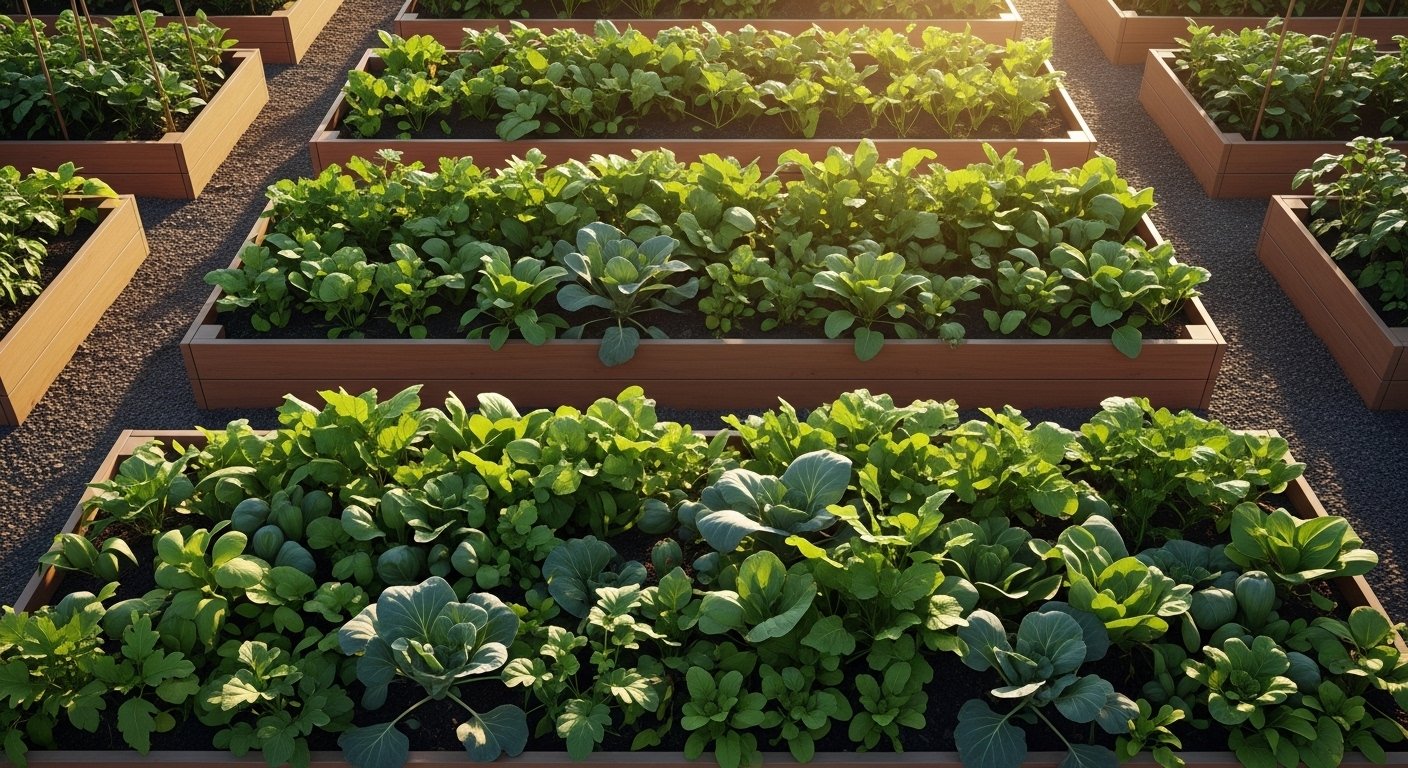
Hey girl, have you ever dreamed of your own little veggie paradise right in the backyard? I’ve been obsessed with raised vegetable garden beds layout ideas lately – it’s like having a mini farm without the hassle. Last summer, I finally built one, and let me tell you, pulling fresh kale for dinner felt magical.
This post is my roundup of the absolute best layouts that make growing your own food stupid easy and super productive. I spent weeks pinning and testing small versions in my yard – some flopped, but these? Total winners. You’ll see why they’re perfect for beginners or anyone short on space.
Stick with me, and you’ll get 12 drool-worthy designs plus tips to make them work in your own garden. No more blank stares at empty dirt – just high yields and happy plants.
12 Raised Garden Bed Layouts That’ll Flood Your Kitchen with Veggies
Circular Veggie Oasis
Look at this gorgeous round bed packed with greens – it’s like a wheel of abundance. I tried a mini version last year for herbs, and it maximized every inch without feeling crowded. Perfect if your space is tight; just rotate crops seasonally for nonstop harvest.
Aerial Bed Grid Magic
This top-down view of neat rows screams organization – love how the paths make weeding a breeze. You can plant tall stuff in the back, like tomatoes, and low-growers up front. I sketched something similar for my plot, and it cut my bending time in half.
Trellis-Wrapped Planters
Wooden beds with built-in trellises? Genius for vining plants like beans or cukes. The ground-level setup keeps it accessible – I added one for peas, and they climbed like crazy. Side note: gravel paths would prevent mud disasters on rainy days.
Diverse Wooden Bed Feast
So much variety in these sturdy beds – carrots, lettuce, everything thriving together. Companion planting shines here; plant basil near tomatoes to fend off pests naturally. My first attempt overflowed with zucchini – had to give it away to neighbors!
Lush Tree-Backdropped Beds
Full, dirt-rich beds with shady trees behind – ideal for partial sun veggies like spinach. It feels so cozy and established. I tucked one against my fence, and the microclimate boosted my yields big time.
Simple Wooden Row Setup
Clean lines of wooden beds bursting with growth – straightforward and scalable. Start small like this if you’re new; I did three beds and expanded as I got hooked. Pro tip: label them with popsicle sticks for rotation tracking.
Flower-Mixed Veggie Patch
Blending flowers and veggies creates a pollinator paradise – those marigolds keep bugs away. It’s pretty enough for Instagram but yields tons. I snuck in nasturtiums once; edible flowers made salads next level.
Gravel-Centered Layout
Boards outlining beds on grass with gravel hubs – drains perfectly, no puddles. Great for wet climates; you could wheelbarrow right through. My yard’s soggy, so this inspired my DIY fix – game changer.
Gravel Path Paradise
Raised planters around a gravel center – walkable and weed-free. Surrounds with grass keeps it lawn-friendly. I love how it zones the space; planted strawberries along the edge for easy picking.
Central Veggie Explosion
Masses of veggies in a central bed setup – pure productivity. Mix root crops with climbers for vertical space hacks. Tried this layout partially; harvested enough peppers for salsa all summer long.
House-Side Flower Veggies
Beds hugging a white house, blending flowers and edibles seamlessly. Super convenient for kitchen access – snip and cook. Mine’s right by the door now; fresh herbs daily, no excuses.
Overflowing Veggie Variety
This one’s stuffed with every veggie imaginable – high-yield heaven. Rotate families to avoid soil depletion. I got carried away mimicking it; ended up with a rainbow chard obsession. Oh, and don’t forget mulch – saves water like crazy.
How to Actually Make This Work For You
Okay, real talk – pick a sunny spot first, at least 6-8 hours daily, and sketch your raised vegetable garden beds layout on paper to fit your space; I wasted wood once by not measuring twice. Use untreated cedar or redwood for beds since they last years without leaching chemicals into your food – source it affordably from local mills if big box stores are pricey. Fill with a mix of topsoil, compost, and vermiculite for drainage that mimics perfect garden soil, and plant in blocks by mature size so nothing shades the little guys. Mulch everything with straw to lock in moisture and squash weeds, then water deeply but infrequently – my plants exploded after I switched to this routine. Oh, and companion plant like basil with tomatoes; it’s free pest control that actually works from my trials.
What’s the best size for raised beds?
Aim for 4×8 feet max – easy to reach middle without stepping in. I went 4×4 for my first; perfect for solo gardeners. Taller is better too, like 12-18 inches for back relief.
How do I prep soil for high yields?
Mix 60% topsoil, 30% compost, 10% peat or coir. Test pH around 6.0-7.0 for most veggies. Refresh annually; mine doubled output after year one tweak.
Can I do this on a small patio?
Totally – stackable beds or vertical ones work wonders. I used two 2x4s on concrete; herbs and lettuces thrived. Add wheels for mobility if needed.
What veggies grow best in raised beds?
Leafy greens, root crops, tomatoes – anything loving loose soil. Avoid corn; too space-hoggy. Succession plant for constant harvest, like I do with radishes.
Leave a Reply