
Hey girl, remember when I first tried my hand at a vegetable garden design raised bed? I was that overwhelmed newbie staring at my tiny backyard, dreaming of fresh salads without the grocery run. It totally changed my summers – nothing beats pulling cherry tomatoes straight off the vine.
This post is my love letter to anyone feeling that same itch. I’ve messed around with a few setups over the years, from total fails to ones that actually fed us all season. Sharing these because I wish someone had pinned them for me back then.
You’re about to see 12 easy vegetable garden design raised bed plans that are beginner-proof and gorgeous. Pick one, tweak it for your space, and watch your green thumb glow up.
12 Raised Bed Garden Ideas You’ll Wish You Tried Sooner
Playground-Side Wooden Boxes
These simple wooden boxes right next to a playground scream family-friendly vibes – perfect if you’ve got kiddos running around. I love how the grass base keeps it low-key and easy to mow around. Last spring, I copied this for my niece’s play area, and she “helped” plant carrots that we munched on picnic-style.
Flower-Filled Planter Paradise
Bursting with colorful flowers in neat raised beds – it’s like a mini cottage garden you can eat from. Mix in some herbs for that double-duty magic. You could totally swap flowers for veggies here and still get that lush look.
Veggie-Packed Central Garden
Whoa, this central veggie explosion in raised beds has me dreaming of harvest parties. All those greens and colors make it feel abundant without taking over the yard. I tried a mini version once; my basil went wild, and pesto nights were nonstop.
Lit-Up Nighttime Planters
String lights hugging these raised beds turn evening weeding into cozy time. Plants look magical glowing like that – adds whimsy to practical gardening. Picture sipping wine out there; I did, and it made my neighbors jealous.
Wall-Mounted Strawberry Towers
Strawberries climbing a building side in vertical raised beds? Genius for tiny spaces – saves ground real estate. I rigged something similar on my fence; picking berries at eye level felt like cheating summer.
Floral Overflow Beds
These flower-drenched raised beds spill over so prettily – imagine swapping in lettuce for that same vibe. It’s all about that soft, romantic edge to veggie growing. One tiny mishap: I overplanted mine first try, but it still bloomed like crazy.
Crates on Grass Setup
Stackable wooden crates as raised beds on plain grass – budget win and super movable. Great starter if you’re testing spots in your yard. I shuffled these around all season to chase sun; ended up with the tastiest kale ever.
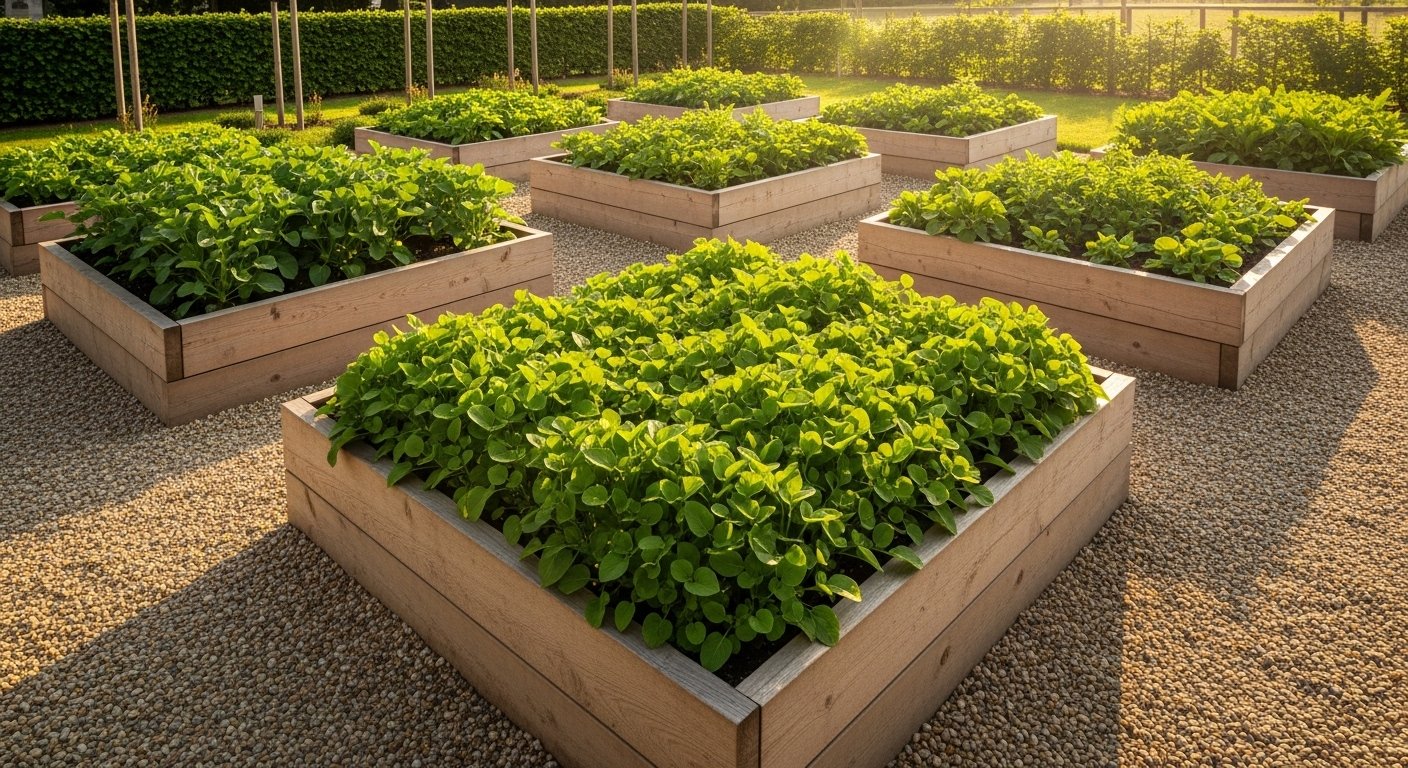
Gravel-Centered Bench Garden
Wooden benches framing a gravel patio with central raised veggie beds – so chic and functional. Sit and sip while your tomatoes ripen. This one’s my dream for next year; current setup lacks that chill factor.
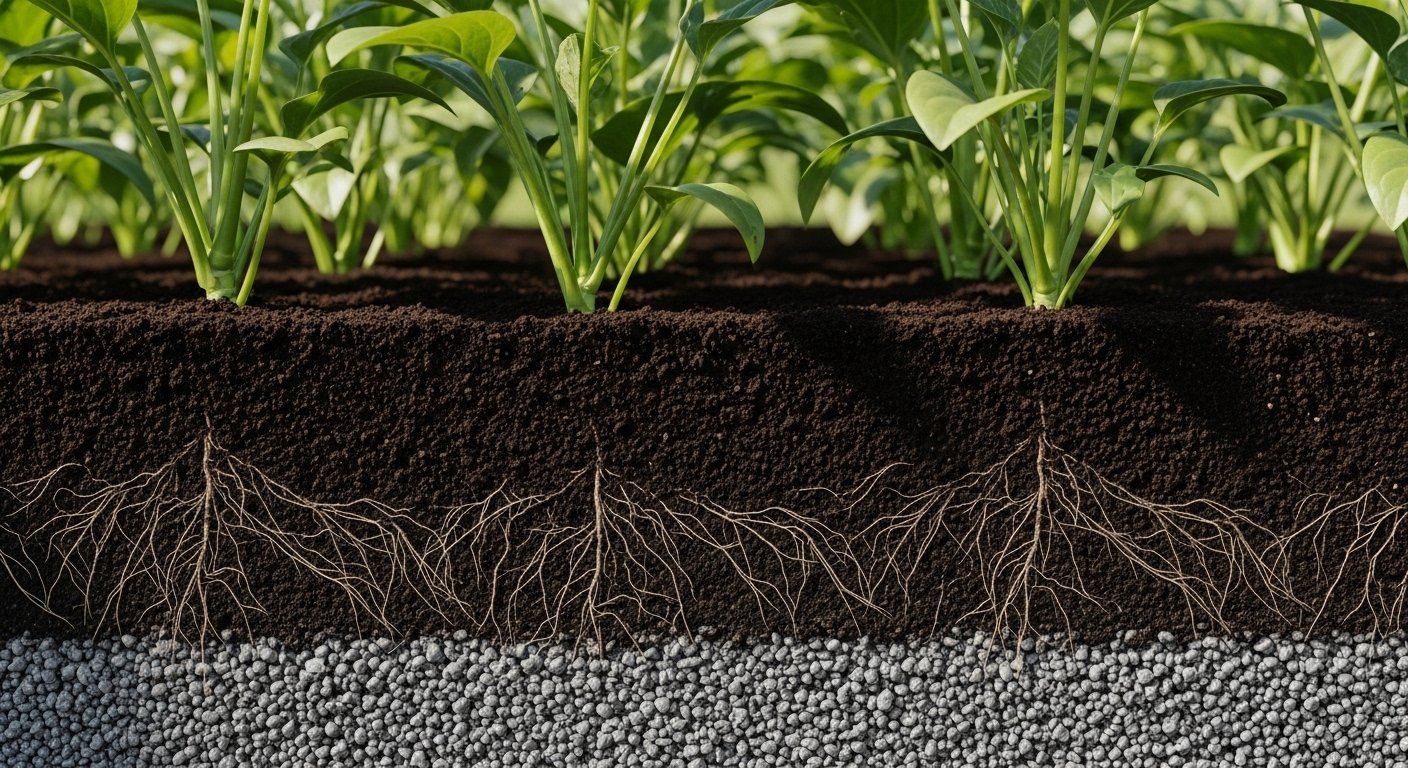
Pro tip: gravel drains like a dream, no mud mess after rain.
Simple Grass Box Clusters
A bunch of wooden boxes plopped in grass, filled with thriving plants. Minimal effort, max reward – ideal for lazy gardeners like me. You just fill ’em with soil and go; my first bed like this hooked me for life.
Gravel-Walled Green Haven
Wooden walls around gravel with side-growing plants in raised beds – privacy plus produce. Feels like a secret garden oasis. I added a gate to mine; now it’s my morning coffee ritual spot, veggies and all.
Classic Multi-Bed Layout
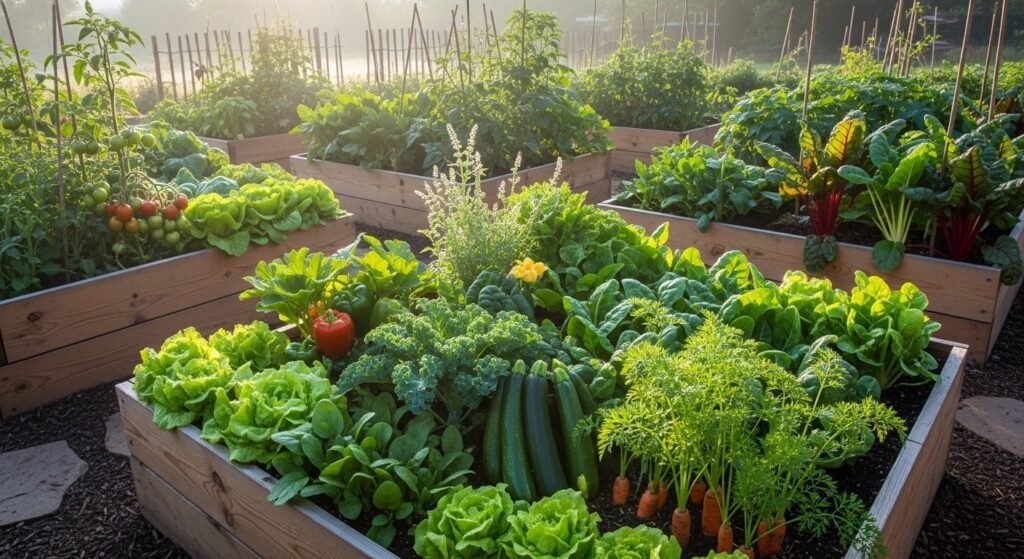
Several raised beds in a row, packed with healthy plants – straightforward vegetable garden design at its best. Rotate crops here for year-round wins. Tried this layout last fall; zucchini overload meant freezer full of bread.
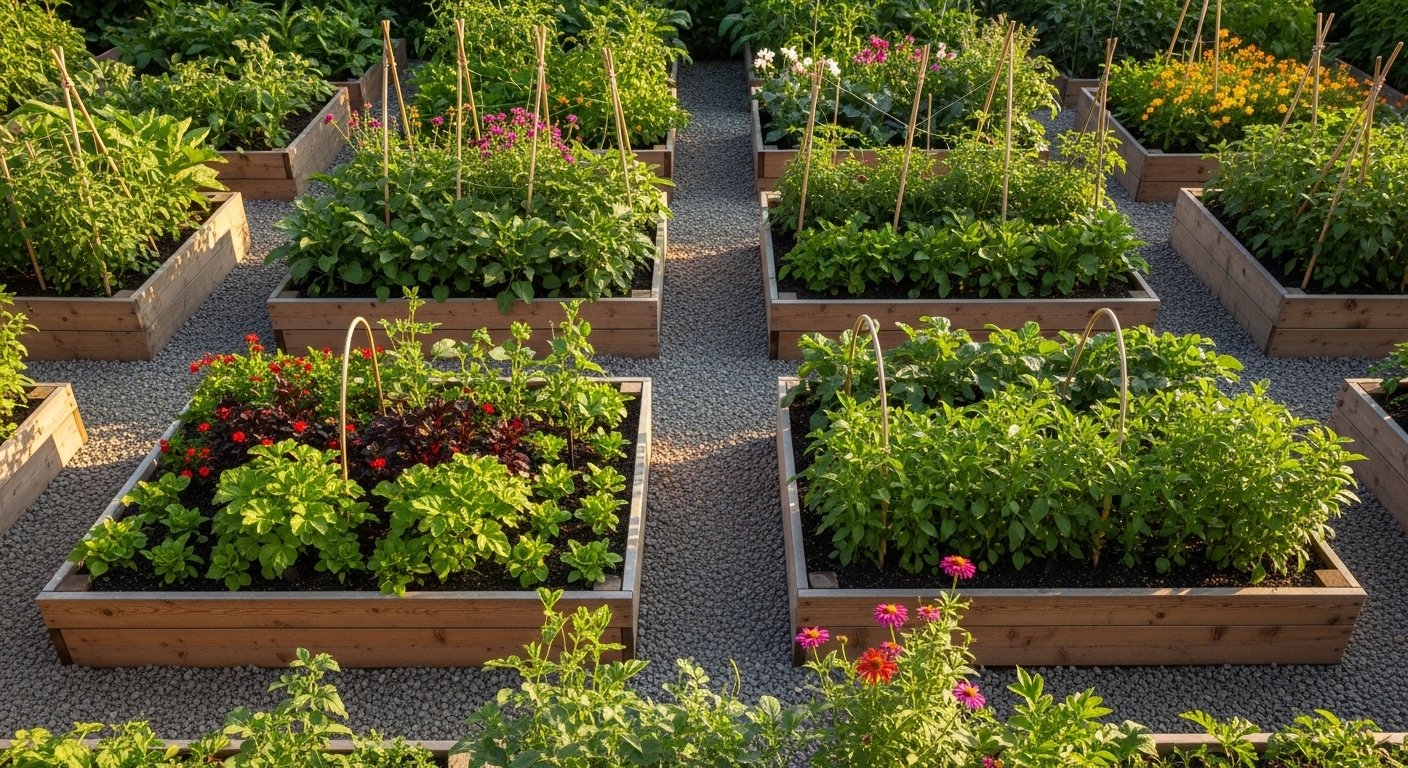
Aerial Veggie Patch View
Bird’s-eye of diverse plants in central raised beds – shows off that organized chaos perfectly. Plan your paths wide for wheelbarrows. From above, you see the flow; I sketched mine this way and it saved so much trial-error time.
How to Actually Make This Work For You
Okay, real talk – start by picking a sunny spot with at least six hours of light, then build your raised beds from untreated cedar or redwood ’cause they last forever without leaching junk into your soil. Fill ’em with a mix of topsoil, compost, and a bit of peat for drainage – I learned the hard way that cheap dirt turns to mud city after rain. Space beds 2-3 feet apart for easy access, and companion plant like marigolds with tomatoes to fend off pests naturally; my garden exploded once I got that right, no chemicals needed. Oh, and water deeply but infrequently – raised beds dry out fast, so mulch heavy with straw to keep moisture in.
What size raised bed is best for beginners?
Go for 4×8 feet by 12 inches high – wide enough for good yield, narrow so you reach the middle without stepping in. I started smaller to test, but this size feels pro without overwhelming. Adjust depth if your back hates bending.
Do raised beds need a bottom?
Nope, open bottoms let roots breathe and worms party – just line with cardboard first to smother grass. Mine thrived that way; weeds stayed gone for seasons. Add hardware cloth if gophers are your nemesis.
What’s the cheapest way to fill raised beds?
Mix store-bought soil with homemade compost and fallen leaves – slashed my costs in half. Hugelkultur style: bury logs at bottom for slow water release. Tastes better than all-new dirt, promise.
How do I keep raised bed soil healthy long-term?
Top up with compost yearly and cover crop in off-season – like clover to fix nitrogen. Rotate plants to dodge diseases; my beds stay fertile three years running now. Test pH occasionally, veggies love 6-7.